How to Optimize a Website in 2026: A Tailored Approach through SEO Copywriting and GEO
Website optimization in 2026 is an integrated process that merges positioning on traditional search engines with visibility within generative artificial intelligence systems. The current digital landscape demands a rapid transition toward strategies that combine technical authority with superior editorial quality.
TL;DR – Marketing in 2026 in Brief
- Online success today depends on the fusion of three pillars: SEO (for visibility on Google), GEO (to be cited by AI like ChatGPT and Perplexity), and E-E-A-T (to guarantee trust and authority). The strategic approach orchestrated at Vettore Consulting coordinates these elements through tailor-made solutions, transforming your website into an active commercial asset.
Table of Contents
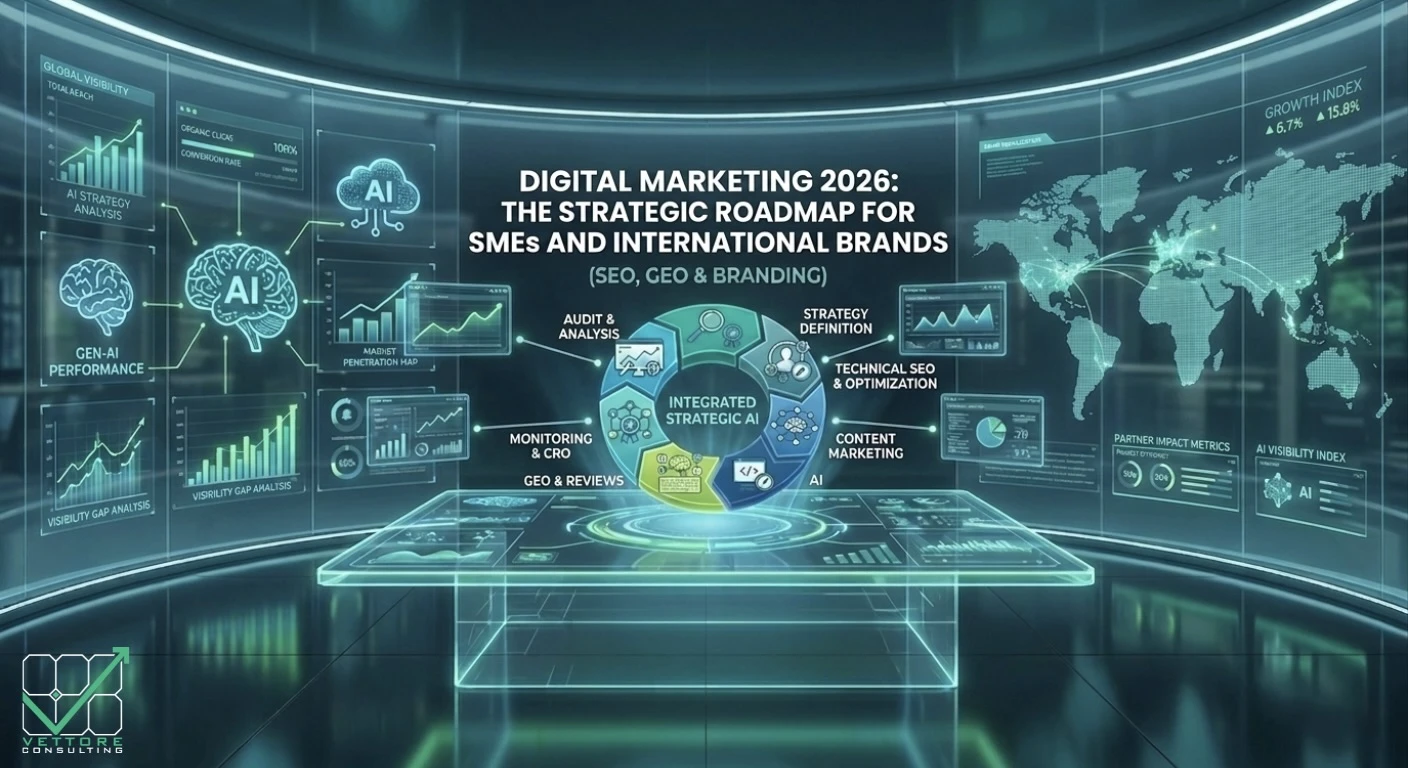
The 7 Steps for Website Optimization and Digital Marketing in 2026
The global market has undergone a radical transformation over the past year. Italian companies operating on an international scale face a double competition: they must appeal to Google’s algorithms and they must convince Large Language Models (LLMs) to suggest their products. This scenario makes the simple technical optimization of the past obsolete. The winning strategy today lies in the balance between structured data, strong branding, and a narrative capable of demonstrating real field experience.
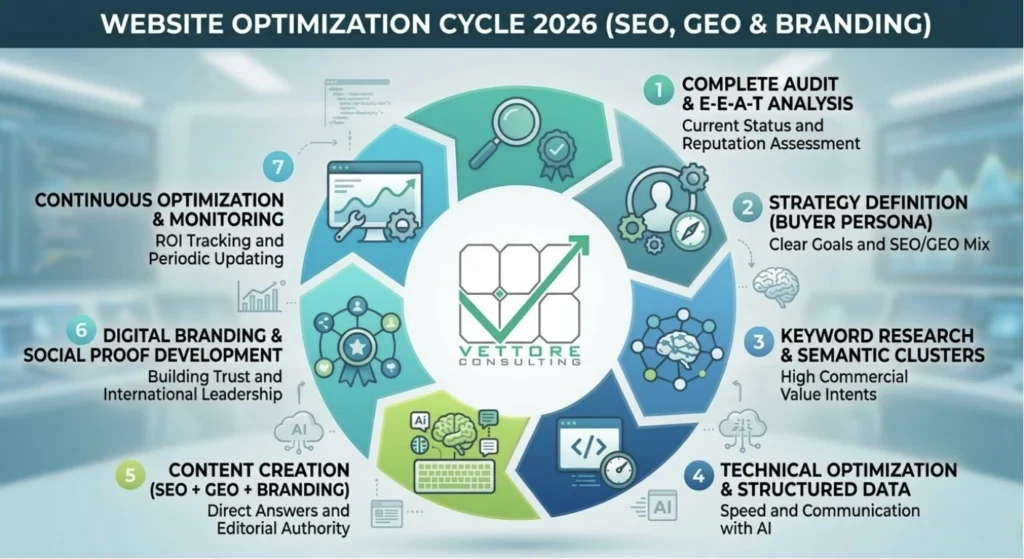
Step 1: Current State Analysis and Strategic Audit
The initial analysis defines the technical and reputational starting point of every digital marketing project through a deep scan of data and metrics.
A complete audit examines organic positioning, technical performance (Core Web Vitals), data structure, and the brand’s authority profile. This process allows for the identification of bottlenecks preventing growth and the mapping of the distance from direct competitors.
| Analyzed Parameter | Audit Objective | Business Impact |
|---|---|---|
| SERP Visibility | Verify presence on key keywords | Organic Traffic |
| E-E-A-T Evaluation | Measure perceived credibility | Conversion Rate |
| Technical Analysis | Optimize speed and architecture | User Experience |
| Content Gap | Find untapped topics | New Opportunities |
Before intervening on the structure, it is fundamental to conduct an E-E-A-T evaluation of the site to understand how much the brand is perceived as authoritative by algorithms. To delve deeper into how Google evaluates your specific expertise, you can consult my dedicated guide E-E-A-T 2026: How to build online authority that works.
At Vettore Consulting, this phase represents the foundation of the entire project. Many entrepreneurs tend to underestimate the preliminary analysis, risking the investment of significant budgets in fragile structures or strategies not aligned with real search intents. An audit executed with professional rigor allows for the allocation of resources where the return on investment is fastest and most solid.
Step 2: Strategy Definition between Buyer Personas and Objectives
Strategy defines the logical path that transforms an anonymous user into a loyal customer through the understanding of their deep needs.
Defining the strategy means mapping the user journey and establishing measurable objectives (KPIs). The ideal mix between traditional channels and new AI frontiers is determined, ensuring that every marketing action is aimed at generating qualified leads or direct sales.
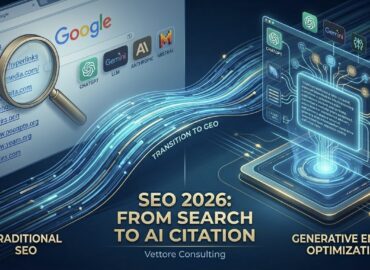
The heart of this phase is operational balance. What is the ideal mix between traditional SEO and GEO? Understanding the distinction between the two is the first step to avoiding digital invisibility. This is a crucial topic that I have covered extensively in the article SEO 2026: Why old SEO is no longer enough. During my years of international consulting, I have learned that a strategy without a clear definition of the buyer persona produces only uninterested traffic.
The strategic approach we adopt at Vettore Consulting begins with the analysis of potential customers to identify the exact moment they seek a solution. This allows us to provide the best possible answer, positioning your brand as the natural and safe choice.
Step 3: Strategic Keyword Research and Topic Clusters
Modern keyword research focuses on intercepting complex search intents and creating rich semantic contexts.
Strategic keyword research identifies high-commercial-value terms instead of just aiming for search volumes. The creation of topic clusters allows for an exhaustive coverage of a topic, signaling to search engines and AI an absolute vertical competence in the reference sector.
In this phase, we look for keywords that possess a clear commercial intent and allow for the construction of strong and interconnected clusters. If you want to understand how to uncover these hidden opportunities, I suggest you consult the in-depth study on Keyword Research that converts in 2026.
The Italian and foreign markets today require extreme granularity. For optimal positioning, it is necessary to go beyond the single keyword, aiming to dominate the entire semantic field related to your product with specific SEO Copywriting. This multichannel website optimization approach ensures that it becomes a hub of precious information, capable of answering user questions in every phase of the sales funnel, significantly improving the overall effectiveness of digital marketing.
Step 4: Technical and Structural Website Optimization
The site’s technical infrastructure must guarantee fluid communication with search crawlers and an instantaneous response speed for the end user.
Structural optimization includes improving Core Web Vitals, the correct use of structured data (Schema.org), and the creation of a logical URL hierarchy. These actions facilitate content indexing and improve site accessibility on every device and browsing platform.
- Loading Speed: Crucial for reducing bounce rate.
- Mobile Experience: Fundamental for mobile-first positioning.
- Structured Data: Necessary to appear in rich snippets and AI answers.
- Logical Navigation: Facilitates the passage of authority between pages.
The implementation of structured data is a technical element that often makes the difference between a common site and a sector leader. Through Schema Markup, we provide machines with an explicit context of who you are, what you sell, and why you are authoritative. At Vettore Consulting, we take care of this aspect with surgical precision, ensuring that every author page is correctly linked to your corporate entity. This technical cleanup is the minimum requirement to then be able to talk about advanced growth strategies.
Ready to simplify your digital transition?
Managing the integration of SEO and new technologies requires an analytical, tailor-made approach.
Contact Vettore Consulting to translate these steps into tangible results for your business.
Step 5: Content Writing and Optimization between SEO and GEO
Content creation represents the communicative bridge between the brand and its audience, optimized to be digestible by both humans and machines.
Modern SEO copywriting integrates direct and concise answers with in-depth sections structured in clear paragraphs (H2, H3). This technique allows artificial intelligences to easily extract information, citing the site as an authoritative source within their generated answers.
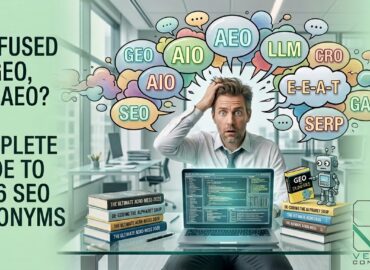
GEO optimization is the beating heart of modern content. Understanding what GEO is and why it revolutionizes SEO in 2026 is indispensable to avoid being excluded from conversations generated by artificial intelligences like ChatGPT, Gemini, and Perplexity. This process, known as Generative Engine Optimization, requires practical knowledge of new digital marketing acronyms like AIO (AI Overviews) and AEO (Answer Engine Optimization).
The operational direction we carry out at Vettore Consulting utilizes so-called “Atomic Answers”: direct answers strategically placed under the main headings. This format favors the capture of “Position Zero” on Google and increases the chances of appearing in AI voice and text summaries. The quality of writing must remain high, maintaining a professional tone that reflects your brand’s values and style.
Step 6: Development of Digital Branding and Authority
Digital branding transforms visibility into trust, creating a lasting bond with the audience through the constant demonstration of value and reliability.
The development of authority passes through communicative consistency across all digital touchpoints and the production of tangible social proof. Testimonials, certifications, and sector publications are the signals that confirm your leadership in the global market.
This phase is where theory meets reputation, and it is fundamental to aim for a solid authority capable of converting every interaction into value. In a world dominated by AI-generated content, documented human experience validated by real case studies becomes the most precious asset. The method in use at Vettore Consulting focuses precisely on elevating your story and your successes to make them the main driver of your customer acquisition and constant sales increase.
Case Study on Digital Branding: SEAFC in Thailand
A concrete example of the power of this approach is the work done with SEAFC in Thailand, where digital image management and the application of targeted personal branding strategies and elite partnerships scaled a complex and competitive market, allowing commercial partners to achieve extraordinary goals.
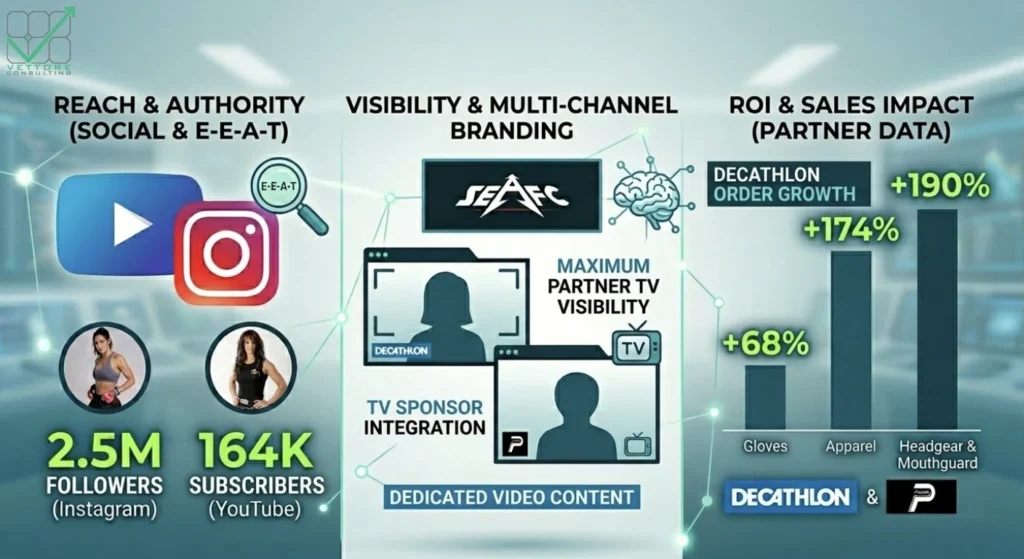
As the data in the graph above clearly shows (taken directly from partner performances), the strategic integration of the brand and multichannel visibility management generated tangible results, with order peaks up to +190% and a combined reach of millions of users. This success confirms the effectiveness of digital marketing when strategic vision meets operational excellence.
Step 7: Continuous Monitoring and Optimization
Digital marketing is a cyclical process in continuous evolution, fueled by constant analysis, testing, and improvements based on the observation of real data.
Constant monitoring includes analyzing SEO positions, verifying citations in AI engines, and controlling the conversion rate. These data allow for content updates and strategy refinement to maintain a constant competitive advantage over time.
Our work methodology includes periodic review sessions to ensure that website optimization remains effective even in the face of algorithmic updates. We use advanced tools to track not only classic keywords but also the “sentiment” of the answers provided by AI regarding our clients. Multichannel SEO requires a careful eye on multiple fronts. The constant update of the best-performing content prevents traffic decay and ensures that the information provided to the market is always fresh and truthful, a factor that Google enormously appreciates for maintaining rankings.
Integrated Optimization FAQ
-
What are the first steps to optimize a site for SEO and GEO simultaneously?
The basis lies in a deep technical and semantic audit. It is necessary to structure content with direct answers for GEO and maintain an impeccable technical architecture for traditional SEO. Our analysis protocol always starts from code cleanup and the definition of thematic clusters.
-
How does digital branding integrate with technical optimization?
Branding provides the trust signals (E-E-A-T) that search engines look for to reward a site. Technical optimization ensures that these signals are readable by machines through structured data and a fluid UX. At Vettore Consulting, we consider these two aspects as two sides of the same coin.
-
Is it better to optimize traditional SEO or GEO first?
The correct approach is parallel. Traditional SEO builds the foundations of organic traffic, while GEO prepares the site for the future of conversational search. This synergy is what ensures your brand is present wherever your potential customer looks for an answer.
-
How long does it take to see concrete results with this method?
The first positive signals usually emerge between 3 and 6 months. Technical positioning is fast, while the construction of authority and constant citations by AI require a constant production of high-value content and a consistent branding strategy.
-
Can I apply this approach even if I have a limited budget?
Absolutely yes. The determining factor is prioritization. For SMEs, the strategies we develop suggest focusing on the most profitable keyword clusters and the optimization of key pages. Targeted planning is always more effective than a generic one executed with huge budgets but lacking a clear logic.
A Real Example: Practical Application of the Integrated Strategy
Over the last few years, I have assisted numerous companies in the critical transition toward advanced digitalization. An emblematic case concerns an operational partner in the professional services sector who, despite having excellent skills, suffered from poor online visibility.
Following the 7-step strategic path we adopt for our partners, we achieved tangible results:
- Keyword Redefinition: Focus on transactional intents and optimization for AI Overviews.
- E-E-A-T Review: Improvement of credibility through author pages and external citations.
- GEO Optimization: Restructuring of texts to favor mentions from ChatGPT and Gemini.
- Branding: Communicative consistency and visual improvements that elevated the brand perception in the eyes of leads.
After six months, the site recorded a constant growth of qualified leads, proving that the union between technique and strategy is the only way for lasting success.
Implementing the New Standard of Digital Marketing
Website optimization in 2026 is the art of orchestrating brand authority, moving beyond technical management to embrace a complete semantic strategy. Success lies in a rigorous method where SEO, GEO, AIO, digital branding, and E-E-A-T become the pillars of modern marketing architecture.
Companies that choose to ignore the evolution of generative engines risk disappearing from user conversations. On the contrary, those who adopt an integrated vision today can acquire an insurmountable competitive advantage, becoming the point of reference in their sector both in Italy and abroad.
If you feel that your current digital presence does not reflect the true value of your company or if your site is not bringing the hoped-for results, it is probably time to change approach.
What you can do now:
The transition to this new standard requires awareness and vision. To help you identify the priority improvement areas of your digital ecosystem, I will soon publish an exclusive 21-point checklist: a self-assessment tool designed to measure how much your site is really aligned with the new dynamics of SEO and GEO.
Want to accelerate your results?
If you prefer to skip the self-analysis phase and want to discover how to implement these strategies directly on your project, I am at your disposal. Together we will analyze your current positioning to transform your site into a strategic asset capable of attracting international leads and consolidating your market authority.