Table of Contents
Think “DIY” SEO Is Cheap? It’s Actually Costing Your Business a Fortune.
Professional SEO consulting marks the thin line between an invisible website and a high-performing digital asset that drives consistent revenue in both regional and global markets. Many business owners view handling search engine optimization in-house as a quick shortcut to shave off operational overhead. However, real-world execution shows that a lack of specialized expertise turns websites into silent digital brochures that bring zero qualified traffic and completely kill B2B and B2C conversion opportunities.
The Impact of In-House SEO
- Blocked Architecture: Product pages and key business offerings fail to get properly indexed.
- Wasted Resources: Junior staff waste valuable working hours on complex tasks outside their skill set.
- Loss of Market Share: Direct competitors steadily capture high-intent, converting search queries.
The Illusions of Savings in Self-Managed Websites
Managing SEO internally without a battle-tested framework creates hidden costs through poor indexation, lost organic traffic, and technical decay. Lacking specialized skills effectively freezes a company’s digital investment.
Core Insights from Real-World Execution
- Complex Infrastructure: Seamlessly linking e-commerce platforms, databases, and ERPs requires deep technical expertise.
- The DIY Risk: Treating search optimization as a side task leaves you with a sales engine stuck in neutral.
- Strategic Fix: Continuous oversight by a specialist guarantees proper indexing and long-term global competitiveness.
My direct experience in the field made this crystal clear. While working as an ICT Manager in Bangkok, launching an e-commerce platform integrated with our central database and ERP, I initially thought hiring someone specifically for SEO content was unnecessary. My main priority was making sure the tech infrastructure, data feeds, and online payment gateways worked without a hitch.
That approach resulted in a technically sound, fully functional e-commerce site with zero organic visibility. The platform remained an idle sales engine for months. Without dedicated SEO content strategy and search optimization, search engines simply couldn’t crawl or rank our products in relevant search results. The major turning point came through a partnership with a leading international tech firm based in Bangkok. That collaboration opened my eyes to how essential dedicated expertise is for building a solid content structure.
Handing off complex search tasks to junior team members to handle in their spare time gives a false sense of financial control. The real bill comes due later through missed revenue targets and expensive, urgent fixes. Businesses operating on an international scale need a rock-solid search foundation to capture audiences across multiple regions.
The AI Shortcut Illusion and Risks to Corporate Reputation
Using generative AI without human oversight leads to repetitive text, factual errors, and severe reputational risks. Generative engines demand strict editorial control from an expert to ensure accuracy and professional authority.
Typical Red Flags of Unsupervised AI
- Factual Hallucinations: Inventing incorrect data, outdated laws, or non-existent references.
- Fluff and Redundancy: Fluff-filled phrasing that inflates word counts and exhausts readers.
- Outdated Information: Complete ignorance of recent industry updates or regulatory shifts.
The explosion of tools like ChatGPT, Gemini, Claude, and Perplexity has created a widespread myth that content creation is now instant and free. Advanced data-driven platforms still require premium subscriptions and strategic handling. Large language models simply generate text using probability logic. As covered in our guide on Copywriting for LLMs, without an experienced human editor, raw AI output comes across as repetitive and offers zero unique value to the reader.
The biggest risk lies in factual accuracy. During a project for a legal consulting firm, I conducted a thorough SEO audit on content written entirely by AI tools. The audit revealed multiple citations of legal decrees that had been repealed years ago. The automated tools had pulled outdated sources, missing recent legal changes. According to analytical studies published by Wired, model hallucinations remain a massive vulnerability for B2B brands publishing content without human verification.
In high-value B2B transactions, publishing inaccurate information instantly destroys brand credibility. Integrating AI for SEO should treat technology as a research assistant, not the primary author. A seasoned professional acts as an editor-in-chief—verifying sources, stripping out fluff, and ensuring all material meets the strict quality standards required by target markets and evaluation algorithms.
Content Architecture Goes Far Beyond Writing Text
A professional SEO roadmap requires competitor analysis, cluster-based architecture, structured data, and constant tracking using dedicated software. Delegating blog creation to unqualified staff is ineffective and directly harms your brand’s web presence.
Core Pillars of a Winning Content Strategy
- Market Analysis: Evaluating real-world search demand and competitor positioning.
- Cluster Architecture: Organizing pages logically using pillar pages and supporting satellite content.
- Technical Setup: Deploying Schema.org markup to streamline search engine crawling.
- Performance Tracking: Continuously monitoring keyword ranks and updating assets dynamically.
Business owners and marketing managers often compare the cost of professional SEO consulting with the low price of free AI tools operated by interns. Starting out with an intern might seem fine at first, but a lack of strategic control creates massive headaches down the road—especially when that team member moves on.
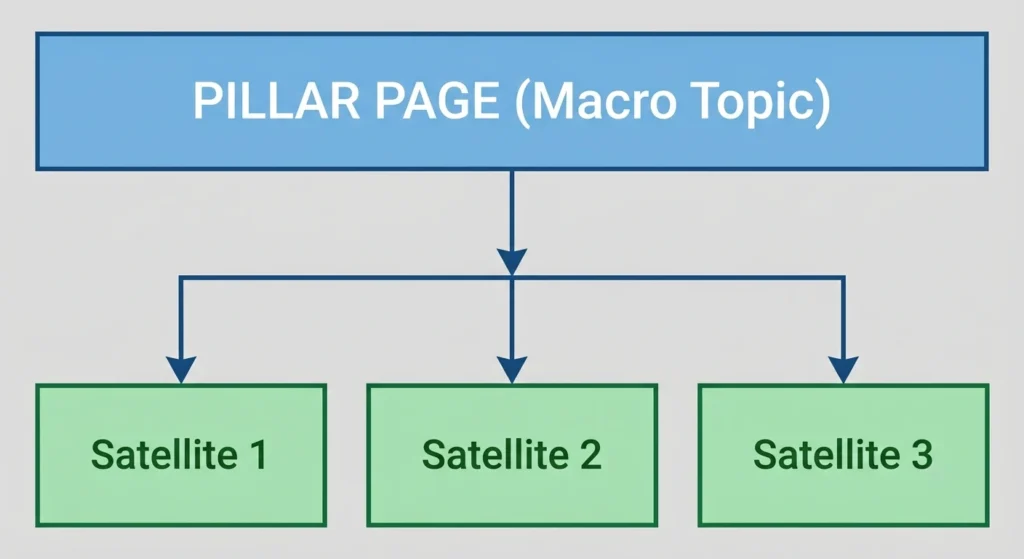
Writing the actual text is simply the final step of a much larger process. High-value search assets are born out of a clear blueprint built on main topic pillars and supporting satellite pieces. The technical setup demands precise markup formatting and Schema tags so search crawlers can easily parse your content.
An SEO expert relies on professional SEO tools like Semrush or Ahrefs to handle critical tasks:
- Competitor Gap Analysis: Uncovering high-value content opportunities your direct rivals missed.
- Search Intent Mapping: Pinpointing the exact keywords used by buyers ready to convert.
- Architecture Planning: Distributing domain authority strategically across key revenue pages.
- Applied Copywriting: Leveraging SEO copywriting to strike the perfect balance between human readability and algorithmic search signals.
Skipping these fundamental steps makes your publishing efforts useless, causing your business to lose market share to competitors backed by advanced analytics.
Digital Footprint Checkup
Don’t let structural flaws or unoptimized content hold your business back.
Assess the health of your digital presence today
The Next Era of Search: Merging Traditional SEO and GEO
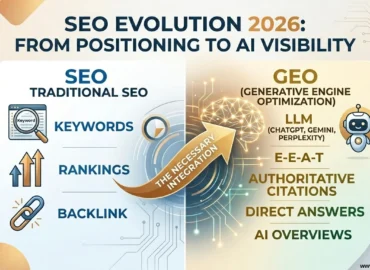
Modern search engines combine traditional SERP listings with AI-generated summaries via AI Overviews (AIO). A combined SEO and GEO framework ensures your brand stays visible in both Google search results and AI citations.
Channels of Modern Digital Visibility
- Traditional Search Engines: Google and Bing for capturing direct search intent.
- Answer Engine Systems (AEO): Google AI Overviews for instant, top-of-page summaries.
- Generative Engines (GEO): ChatGPT, Perplexity, and Claude for authoritative brand mentions.
Search habits have undergone a massive shift. The rapid adoption of Answer Engines and conversational search tools means businesses must rethink their visibility playbook. Looking at GEO vs SEO reveals a powerful tech synergy rather than a battle between two approaches. Traditional SEO secures high rankings on standard search engine results pages. Generative Engine Optimization (GEO) and AEO tactics structure your data so AI models cite your business as a trusted source in generated answers.
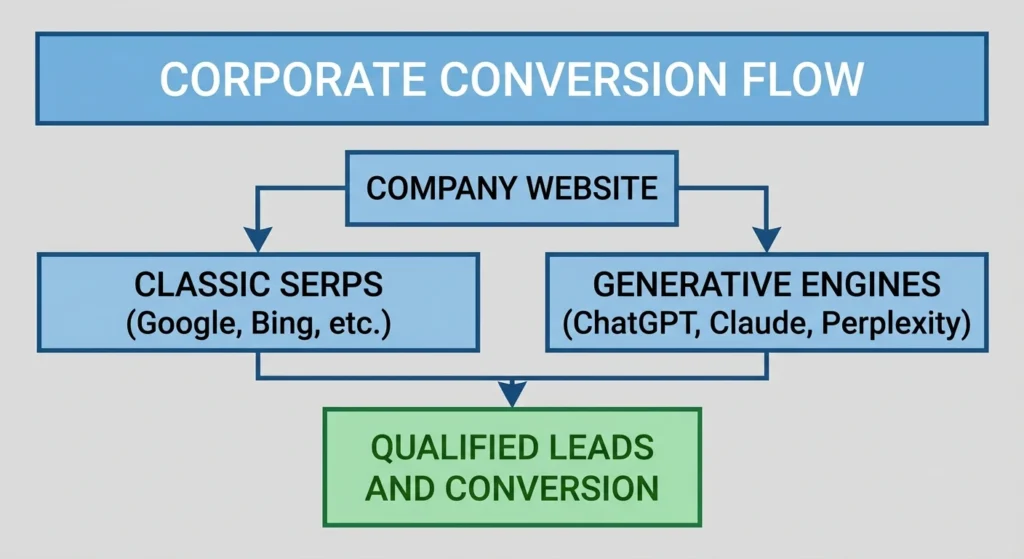
Official technical documentation on Google Search Central stresses that accurate, clear, and well-structured data is mandatory for AI extraction. LLM algorithms prioritize content built with explicit definitions, summary tables, verified sources, and high E-E-A-T (Experience, Expertise, Authoritativeness, and Trustworthiness).
A digital platform lacking semantic structure remains completely invisible to both traditional searchers and decision-makers using AI assistants to find global business partners. An integrated approach ensures your brand covers every digital touchpoint.
DIY Management vs. Professional SEO Consulting
Working with a dedicated consultant delivers measurable ROI through qualified leads, structured data implementation, and brand security, eliminating the hidden expenses of DIY shortcuts.
Comparative Matrix of Optimization Approaches
| Analysis Factor | DIY Management / Unsupervised AI | Professional Consulting (Vettore Consulting) |
|---|---|---|
| Information Architecture | Isolated pages with no semantic connection between topics. | Strategic topic clusters with mapped pillar and satellite pages. |
| Fact-Checking | High risk of factual errors, legal hallucinations, and dead data. | Rigorous verification using up-to-date primary sources. |
| Keyword Strategy | Pure guesswork without search volume or intent analysis. | Data-driven analysis of real search intent and business value. |
| Structured Data | Missing entirely or limited to basic CMS formatting tags. | Advanced Schema.org setup tailored for both SEO and GEO engines. |
| Performance Tracking | Basic page view metrics without conversion context. | In-depth reporting covering ROI, lead quality, and conversions. |
| Long-Term Stability | Extreme vulnerability to core search algorithm updates. | Sustainable visibility designed to weather search updates. |
Investing in technical excellence through professional SEO consulting and GEO strategies shields your company from sudden organic traffic drops. Partnering with the right specialist turns your website into a reliable customer acquisition engine. DIY fixes might look like a bargain upfront, but they almost always lead to costly re-platforming and cleanup projects down the line.
Professional Platform Review
Before jumping into the FAQs below, take a moment to evaluate your current web performance.
Protecting your channels from traffic drops requires a timely, accurate diagnosis.
Frequently Asked Questions on SEO consulting, GEO and AI (FAQ)
-
What are the main risks of using unsupervised AI for corporate content?
Using generative AI without expert oversight exposes your business to factual errors, outdated legal references, repetitive phrasing, and lost authority. AI works best as a research assistant; verifying sources and mapping strategy still requires human expertise.
– Reputational Damage: Publishing inaccurate data destroys credibility with B2B buyers.
– Lack of Strategy: AI cannot organize site architecture or plan topic clusters on its own.
– Search Penalties: Low-value, duplicated text gets deprioritized by search algorithms. -
Why does DIY or intern-led SEO waste company budget?
DIY search efforts fail because they focus solely on cranking out articles without technical setup, keyword strategy, or proper indexing. Without deep technical skills, the site sits idle while future recovery costs far outweigh hiring an expert from day one.
– No Indexation: A sleek website stays invisible without sound technical SEO and Schema tags.
– Missing Tooling: Lacking professional software makes it impossible to analyze competitors or search intent.
– Expensive Recovery Costs: Fixing keyword cannibalization or algorithmic penalties requires complex work. -
What is the core difference between an SEO expert and an AI tool?
AI generates text using probability algorithms, whereas an SEO expert directs high-level strategy and editorial quality. A specialist analyzes market data, verifies facts, deploys structured markup, and aligns content to generate real revenue.
– Custom Business Fit: AI knows nothing about your internal sales processes or backend tech stack.
– Rigorous Fact-Checking: A human strategist validates regulations and cuts out artificial fluff.
– Search Intent Mastery: An expert targets commercial keywords that actually drive business. -
Is a ChatGPT Plus subscription enough to rank a business website?
While a ChatGPT Plus subscription is a great drafting assistant, it cannot replace a full digital strategy. AI can draft text, but it lacks the features required to analyze SERPs, evaluate keyword difficulty, or perform deep technical site audits.
– Technical Tool Limits: AI doesn’t optimize technical performance like site speed or crawl budget.
– Zero Competitor Tracking: Generative tools offer no visibility into your competitors’ search footprints.
– Missed Opportunities: Relying solely on AI results in poor organic reach and lost leads. -
How can companies prevent AI hallucinations and factual mistakes?
Preventing AI errors requires a strict human editorial process. Teams must manually verify facts and statistics against primary sources, trim wordy phrasing, and enrich the text with real-world case studies and company expertise.
– Manual Source Checks: Always cross-reference legal codes, dates, and stats before publishing.
– E-E-A-T Integration: Inject first-hand experience to stand out from generic content.
– Expert Editing: Use AI strictly for initial outlines and let an SEO copywriting professional handle the final piece.
Future-Proof Your Corporate Digital Growth
Treating your search presence as an afterthought caps your growth, whether you operate locally or across global markets. Combining traditional optimization with Generative Engine Optimization ensures your business remains the go-to choice across standard search engines and modern AI engines alike.
Adopting a disciplined system protects your digital assets, prevents technical penalties, and turns your corporate site into an active lead driver. Vettore Consulting helps companies engineer conversion-focused digital frameworks by combining technical audits, editorial strategy, and end-to-end performance tracking.
Invest in tailored SEO consulting designed specifically around your commercial goals. Fill out the contact form below to request a digital footprint audit and start building a dominant online presence in your industry.